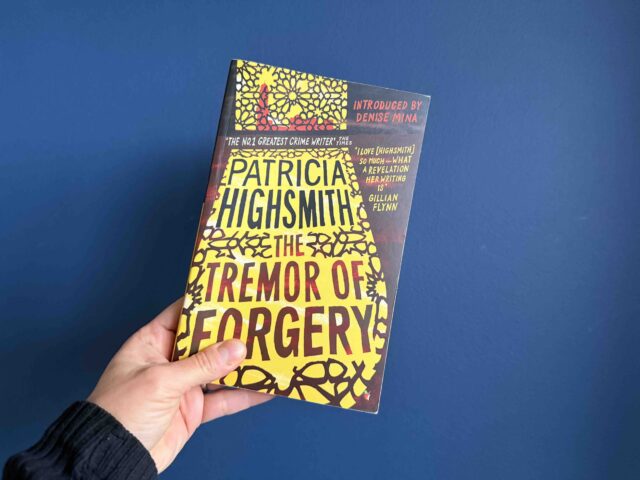
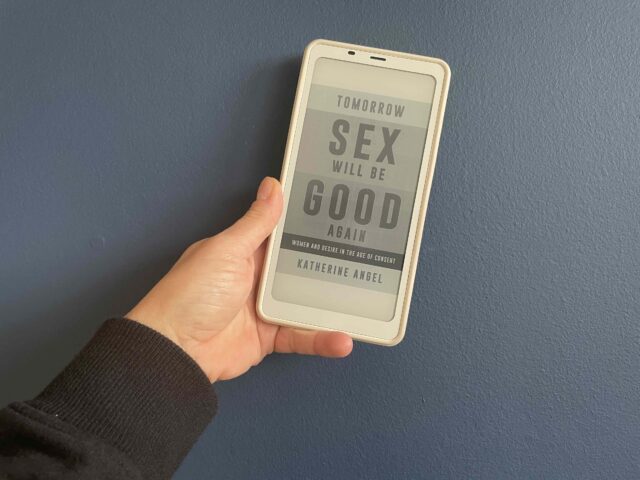
It is an honour to have a short article on kissing in photography published in the same issue as a discussion on HBO’s TV show ‘In Treatment’ and the rise of internet sex.
Read the article here (PDF 1.7MB).

Posted in Blog,Peripheral thoughts,Psychoanalysis,Seductive artworks,Writing | No Comments »
I am off to the Transmission: Hospitality conference, my second one this summer and one I am particularly looking forward to, as I will be part of a panel I proposed a few months back and which will be chaired by Dany Nobus. Simon Bacon, a vampiricist I met recently at the Psychoanalysis, Culture and Society conference, Miguel Santos, Allie Carr and Francis Summers, three fabulous artists, and the always interesting Sharon Kivland and Jaspar Joseph-Lester will be there, as well as a host of superb keynote speakers.
Here’s what Nicky Bird, Bran Nicol and I will be discussing on Saturday morning:
ART AND THE STRANGER: LISTENING, SEDUCING, STALKING
How does one relate to whom one doesn’t know? The stranger is all around us; we cross his path many times per day. The position of the stranger is a reversible one: for the other, it is us that take its place. The question has implications in relation to the work of art, as artists have attempted a direct engagement with strangers as part of their practices, or, indirectly, though the encounter of their work with the viewer. The stranger also has significance in the psychoanalytic setting, where the patient reveals her innermost secrets to a stranger, and the analyst invites one to the consulting room, also usually his home. Drawing from a variety of practices, from film and art to literature and psychoanalysis, this panel proposes three approaches to the unknown person, the stranger.
First, through the act of listening, we attempt to recognize ourselves in the stranger, to establish a bond, a relationship with him. Listening, however, is a very complicated endeavour. How can one listen, really listen, to an other? In his writing, Sigmund Freud proposes a technique called evenly-hovering-attention, which aims at shifting the emphasis from the meaning of the words to a more rounded approach to the other’s speech. This paper will draw from collaborative and performative practices, where the work emerges either from a conversation with a person or a group, then unknown, but becoming something else through the engagement, or from a playful and slightly mischievous activity: eavesdropping.
The consequences of being involved in the acts of talking and listening can be very varied, from friendship to love, transference and countertransference –the particular relationship of identifications between analyst and patient. But before these are arrived at, there is another interim stage, which the second paper in this panel will explore: seduction. Attracted by the stranger, we surrender our free will to his mystery. Works of art use diverse techniques to seduce so the second speaker will perform, impersonate, frame and follow –to name but a few strategies– to engage with the strangers in the audience.
But seduction hangs in a fine balance, it is already at the edge of morality. The obsession with a stranger, whom, in a delusional state, one believes one knows, will be the subject of the third paper. The act of stalking is the pursuit of someone as part of an investigation, or with a criminal intent. It involves a multitude of acts and is often the continued return of a rejected proposition –just like the repressed returns. The outcome can, as in the case of Sophie Calle, lead to a nice trip to Venice, a court appearance or, as happened to Agnetha Fältskog, a relationship ending in disaster.
These three papers, with their differing approaches and strategies to engage with the stranger, will make the audience consider their own everyday encounters in, for example, supermarket queues, art installations, trains, therapeutic relationships, lifts.
The full papers will be published on the website or the new Transmission: Annual journal after the event so watch this space!
Posted in Blog,Interesting people,News,PhD,Practice,Psychoanalysis,Seduction,Writing | No Comments »
This series of monographs really appeals to my obsessiveness with specific works of art. Just like having a private critical museum… They even have a lovely volume on Étant Donnés. How not to include it? It is one of the most recurring images I have ever encountered…

Posted in Blog,Interesting people,Reading,Seductive artworks | No Comments »
A very interesting course at Tate Modern. I would so love to have the resources to teach something like this:
Led by Lucy Scholes and Richard Martin
10.30-16.00 on 5 June only
10.30-13.00 all the other sessions
Combining film, literary and psychoanalytic theory, this six-week course explores the fascinating theoretical connections within the work of Sigmund Freud, Arthur Schnitzler and Stanley Kubrick. Honing in on Kubrick’s controversial last film, Eyes Wide Shut (1999) – adapted from Schnitzler’s novella Dream Story (1926), which in turn can be traced back to Freud’s The Interpretation of Dreams (1900) – we will consider how successfully cinema has depicted the dynamics of desire, dreams and fantasy.
Classes will begin with a short introductory lecture on the main themes of the week, with class discussion – in small break-out groups and as a whole – forming the majority of each session. Eyes Wide Shut will be screened as part of an extended first session, and the course will also include a session led by the film’s executive producer, Jan Harlan, as well as visits to Tate Modern’s Exposed: Voyeurism, Surveillance and the Camera exhibition and to the Stanley Kubrick Archive at the University of the Arts London. No prior knowledge is needed.
In order to make the most of this innovative, multi-disciplinary exploration of some of the twentieth century’s most fascinating ideas, participants will be expected to read Schnitzler’s Dream Story and sections of Freudian theory. Additional material and suggested reading will be handed out in class in advance of each session. The class will also be encouraged to consider the course’s written and visual material alongside the artworks in Tate Modern’s collection.
For a course outline, click here
Posted in Blog,Interesting people,Peripheral thoughts,Psychoanalysis,Reading,Theory | 3 Comments »
On the 5th of June, I will be giving an overview of my recent work on seduction at the Psychoanalysis, Culture and Society conference at Middlesex University.
Here’s my abstract, to whet your appetite (if psychoanalysis, culture and society are your thing, of course):
Make me yours: studying the psychodynamics of seduction through works of art
In Fatal Strategies, Jean Baudrillard writes that music and literature are seductive in themselves. Given his later interest in photography and the works of Sophie Calle, it could be argued that seduction is also an attribute of the visual arts. But what makes a work of art seductive? My research is concerned with the relational and psychodynamic aspects of the encounter between the work of art and the viewer; one that, when seduction operates, is characterized by interplay, flow and conflict.
The first step towards disentangling this research problem is to define seduction, a concept that is contingent, ridden with confusion, contradictions and connotative interpretations. Any attempt at pinning down the term, however, shows that it is pervasive and, as a ruling principle, it operates everywhere –especially where efforts to study it are made. The question, then, becomes a methodological one: how might one study seduction as it operates in the encounter with works of art? I put forward a subjective, practice-led approach, comprised of three strands: artistic –in particular photography–, psychoanalytic and writing. All three enact the self-reflexive methodology that is at the core of the contribution my project aims to make, and which is constituted of three steps: recognition, capture and reflection.
In this paper, my own (nearly missed) encounter with a work of art, Marcel Duchamp’s Étant Donnés, and a bold shoe in a New York shop window will be used as props to explain this complex problem. Jacques Lacan’s mysterious objet petit a, the object cause of desire and Freud’s abandonment of the seduction theory will be discussed in the context of these experiences. There will also be the occasional appearances of a detective –who will provide the forensic gaze required of a presentation by a final year PhD student– and other minor characters.
Posted in Blog,News,PhD,Practice,Psychoanalysis,Writing | 1 Comment »

Exposed at Tate Modern
This looks stunning:
Exposed
Voyeurism, Surveillance and the Camera
Tate Modern 28 May – 3 October 2010
Exposed offers a fascinating look at pictures made on the sly, without the explicit permission of the people depicted. With photographs from the late nineteenth century to present day, the pictures present a shocking, illuminating and witty perspective on iconic and taboo subjects.
Beginning with the idea of the ‘unseen photographer’, Exposed presents 250 works by celebrated artists and photographers including Brassaï’s erotic Secret Paris of the 1930s images; Weegee’s iconic photograph of Marilyn Monroe; and Nick Ut’s reportage image of children escaping napalm attacks in the Vietnam War. Sex and celebrity is an important part of the exhibition, presenting photographs of Liz Taylor and Richard Burton, Paris Hilton on her way to prison and the assassination of JFK. Other renowned photographers represented in the show include Guy Bourdin, Henri Cartier-Bresson, Philip Lorca DiCorcia, Walker Evans, Robert Frank, Nan Goldin, Lee Miller, Helmut Newton and Man Ray.
The UK is now the most surveyed country in the world. We have an obsession with voyeurism, privacy laws, freedom of media, and surveillance – images captured and relayed on camera phones, YouTube or reality TV.
Much of Exposed focuses on surveillance, including works by both amateur and press photographers, and images produced using automatic technology such as CCTV. The issues raised are particularly relevant in the current climate, with topical debates raging around the rights and desires of individuals, terrorism and the increasing availability and use of surveillance. Exposed confronts these issues and their implications head-on.
Posted in Blog,Practice,Psychoanalysis,That photo | No Comments »
I’ll be showing Misrecognition and SplitFlip as part of As We Speak, a Glasgow International 2010 event.
Come down to Stereo (Renfield Lane) on Wednesday 28 April at 8pm to see them and other wondeful experimental videos and moving image artworks.

So as my other show closes, new works appear in the city. Who said I never exhibit in Glasgow?
Posted in Blog,Methodology,News,Practice,Psychoanalysis | No Comments »

Forestay Waterfall, which inspired Etant Donnes
Isn’t this the most wonderfully obscure symposium ever? I wish I could go – alas, I will be at another very obscure one, Jacques Lacan Today at UCL, in London. This is one of those event when one is guaranteed to share interests with the rest of the attendees. I should write to the Catalonian authorities of the place where Duchamp found the Spanish door to encourage them to make a rival symposium…
Posted in Blog,Interesting people,Seductive artworks | 2 Comments »
An exhibition of work by researchers.
Grace and Clark Fyfe Gallery, Scott Street, Glasgow
16-28 April 2010
You are cordially invited to the Private View of the show, which will take place on Friday 16th April, at 6pm.


Posted in Blog,News,PhD,Practice,Seduction,Seductive artworks | No Comments »