Skip to content
Books
Single Authored Books
Edited Books
Edited Journals
- Laura Bissell, Mona Bozdog, Laura Gonzalez and Aby Watson, eds. Scottish Journal of Performance Special Issue Art of Care, Vol.5, Issue 1, 2018.
- Laura Bissell, Mona Bozdog, Laura Gonzalez and Aby Watson, Editorial, Scottish Journal of Performance Special Issue Art of Care, Vol.5, Issue 1, 2018, pp. 5-11.
- Laura Bissell, Laura Gonzalez, Dee Heddon and Simon Murray, Afterword: Acts of Care Scottish Journal of Performance Special Issue Art of Care, Vol.5, Issue 1, 2018, pp. 179-184.
Book chapters
- ‘Making Ghosts Heard’, Hysterical Methodologies in the Arts. Rising in Revolt, Johanna Braun (ed), London: Palgrave Macmillan, 2021, pp. 257–270
- ‘Twenty-seven thoughts on one breath’, On Care, Rebecca Jagoe and Sharon Kivland (eds), Hastings: Ma Bibliothèque, 2020, pp. 69-75
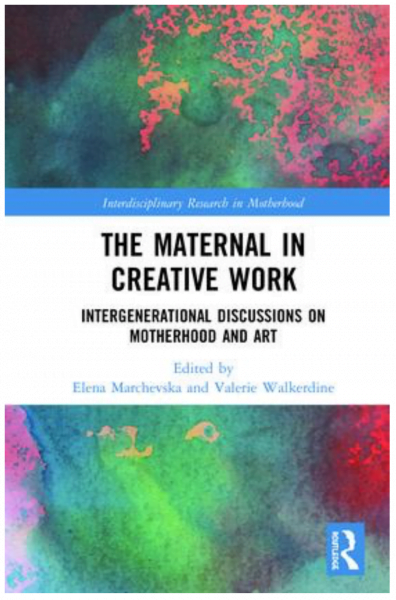
- ‘Blueprint for a ghost’, with Dr Eleanor Bowen, Maternal in creative work: Intergenerational discussions on motherhood and art, Elena Marchevska and Valerie Walkerdine (eds), Routledge, 2019, pp. 83-96.
- ‘Hosting Hysteria’, Translating across Sensory and Linguistic Borders: Intersemiotic Journeys between Media, Madeleine Campbell and Ricarda Vidal (eds), Palgrave Macmillan, 2019, pp. 167-184.
- ‘Work of Art as Analyst as Work of Art’, Transpositions Aesthetico-Epistemic Operators in Artistic Research, Michael Schwab (ed), Orpheus Institute, 2018, pp. 75–95. Free ebook here.
- ‘Crossing the Cyprus Divide Armed with Pen and Paper’, with Dr Myria Christophini (main author), Peace as a global language: Explorations of peace in practice: Selected Papers, M. Parrish & R. Richardson (eds), Kobe: Peace as a Global Language, 2018, pp. 289-359
- ‘Reading as Creative Practice’. In The Adapt-r Creativity Book, Brussels: KU Leuven, 2017, pp. 169–177.
- ‘Seduction in Works of Art’. In Seduction in Popular Culture, Psychology, and Philosophy, ed by Constantino Pereira Martins, Fabrizio Macagno, Manuel José Damásio, Hershey, PA: IGI Global, 2016, pp. 165-187. Table of contents available here.
- ‘Between laughter and crying’, co-written with Dr Eleanor Bowen. In Madness, Women and the Power of Art, edited by Frances Davies and Laura Gonzalez, Oxford, Inter-Disciplinary Press, 2013, pp. 197–234.
- ‘The Hysteric as Mad: Unfolding an Exquisite Corpse’, co-written with Dr Eleanor Bowen. In ‘Beyond these Walls: Confronting Madness in Society, Literature and Art’ [ebook], edited by Helen Goodman, Bernadette V. Russo and Joana Zózimo, Oxford, Inter-Disciplinary Press, 2013.
- ‘Juicy Salif as a Cultish Totem’. In Barbara Townley & Nic Beech (eds) Managing Creativity: Exploring the Paradox. Cambridge: Cambridge University Press, 2010, pp. 287-309. Download PDF (1.93MB).
Printed Works
- Cover of ELSE journal (Untitled, composite image created with Christopher Danowski), inaugural issue 0, April 2014.
- B (page as dance stage), printed work in Crux Desperationis, issue 5 (PDF 3.7MB), Montevideo, January 2014, p. 12.
- Provocatrice II, printed work in The Brooklyn Review 29th issue, 2012.
- The Scene of a Crime, 2HB Vol. 10, edited by Francis McKee and Louise Shelley, July 2011, Centre for Contemporary Arts, Glasgow. Download PDF (1.4MB).
- Author for The Black Merkin, part of Bad Romance, a collaborative project by the New Society of Dilettanti, launched at Collective Gallery in Edinburgh on 20 August 2011. Download PDF (2.7MB).
- Untitled (Mind / Body), The Mind’s Construction magazine, pilot issue, London, December 2004, pp. 26-27. Download PDF (708KB).
- Untitled (Mind / Body) The Mind’s Construction magazine, pilot issue, London, December 2004, pp. 26-27
Papers and articles
- Bissell, Laura; Doolittle, Emily; and González, Laura (2025) ‘On Inspiration,’ Turning Toward Being: The Journal of Ontological Inquiry in Education: Vol. 3: Iss. 2, Article 2. Available from https://rdw.rowan.edu/joie/vol3/iss2/2/
- Dear Audience of One’, TURBA The Journal for Global Practices in Live Arts Curation, 4.2, CARE: Curating Audience Relationships & Engagements, Sept 2025, pp.104-105. DOI: https://doi.org/10.3167/turba.2025.040208
- ‘Training the breath’, Theatre, Dance and Performance Training, 16:2, 2025, pp. 282-285. DOI: https://doi.org/10.1080/19443927.2025.2498303
- Laura Bissell, Emily Doolittle and Laura González, ‘Creativity, health and sustainability: A wholearchy of learning’, Journal of Perspectives in Applied Academic Practice Vol. 13 No. 1 (2025): Creativity Special Issue, pp. 285-290. Available from https://jpaap.ac.uk/JPAAP/article/view/635/755
- Girls on Film, an essay for The Idler, issue 102, May-June 2025, pp. 46-49. See PDF
- ‘The Present Breath’, Scene, volume 12, 1-2, 2025, pp. 65-80. DOI: https://doi.org/10.1386/scene_00065_1
- ‘Hosting in the first person’, Proceedings of Carpa7: Elastic Writing in Artistic Research, ISBN 978-952-353-052-2, Theatre Academy University of the Arts Helsinki
- A Kind, Deep Breath, The Green Room, RCS at Home, 20.05.20
- The [Dis]appearance of Hysteria , an essay for The Polyphony, a Medical Humanities Web Platform, hosted by the Institute for Medical Humanities at Durham University with financial support from the Wellcome Trust, 14.04.20
- Music for Moths, a reading of a collage by Pum as part of her exhibition Earth Echo Affective Reflection in Project Ability and published in the catalogue, Glasgow, 08.03–27.04.19
- Madeleine Campbell and Laura González,‘“Wozu Image?” / What’s the Point of Images? Exploring the Relation between Image and Text through Intersemiotic Translation and Its Embodied Experience’, Open Cultural Studies, Vol. 2, Issue 1, 2018, 686–699.
- Body Anxiety: Woman As Bearer Of The Look, Furtherfield, 24.03.15.
- ‘Trance art and other possessions’, co-authored with Christopher Danowski, ELSE Journal, Issue 0, October 2014, pp. 140–147.
- ‘Other Mothers’, curatorial statement for the exhibition Alternative Maternals, artists: Deborah Dudley (USA), Linda Duvall (Canada), Jeca Rodriguez Colón (Puerto Rico), Miriam Schaer (USA), Valerie Walkerdine (UK), 03–09 August 2014, Lindner Project Space, Berlin. Read PDF (1MB).
- ‘Trance art and other possessions’, co-authored with Christopher Danowski, Trans-What? conference proceedings, 28 July 2013. Part of the Transartfest Art Biennial, 27 July–9 August 2013, Berlin.
- ‘What’s the First Thing You Ever Made, Laura Gonzalez?’ The Project Room Off Paper, 2011. Read it here.
- ‘Kissing exposed to the gaze’. New Associations, issue 3, summer 2010, p. 15. Read PDF (1.7MB).
- ‘Cities that fold in on themselves’. In Gaia Persico (curator), Urban Origami. Exhibition catalogue. PM Gallery & House, 1 July – 29 August 2010. London: Arttra, pp. 8-9. Read PDF (70KB)
- ‘Stranger, Seducer’. In Conference Proceedings from Transmission: Hospitality. 1-3 July 2010, Sheffield Hallam University.
- ‘An artist reflects on an artist’s Biennale’, Arttra. Forum for Contemporary Arts, 2009. Read PDF (520KB).
- ‘Escape to Your Unconscious’. In New Escapologist Magazine, Issue 2, 2009. pp. 55-57. Download PDF (822KB).
- ‘The line, the look and the gaze’. In Gaia Persico (curator), Isobar. Exhibition catalogue. Fieldgate Gallery, 20 October – 11 November 2007. London: Arttra. pp. 18-21. Read PDF (696KB).
- A Biennial in Venice, The Mind’s Construction Quarterly, 2005. Read PDF (130KB).
- White worship: the iPod, Arttra. Forum for Contemporary Arts, 2005. Read PDF (99KB).
- The Edge of Emptiness; an essay on Thomas Joshua Cooper. Arttra. Forum for Contemporary Arts, 2005. Read PDF (100KB).
- Sophie’s World: The Delusions of the Artist, The Mind’s Construction Quarterly, 2005. Read PDF (101KB)[Spanish / Español]: El mundo de Sophie: El espejismo del artista
- Skin Against Stone: Julio Medem in London, The Mind’s Construction Quarterly, 2003. Read PDF (53KB)[Spanish / Español]: Piel contra piedra
- National Pride: the 50th Venice Biennale, The Mind’s Construction Quarterly, 2003. Read PDF (58KB).
- Parchu (to Honour), in ‘Metamorphosis’, an exhibition of works by Jude James and Evi Chamouratidou, PINAKOQHKH MARGARH, 2002. Read PDF (438KB).
Conference papers
- ‘Resistance and Persistence’, Society for the Social History of Medicine Biennial Conference: Resistance, The Centre of the Social History of Health and Healthcare (CSHHH), University of Strathclyde, 16-19.07.24.
- ‘Prana and the Gut’, Modernity and the Gut, Scottish Gut Project, Kelvinhall, University of Glasgow, 27-28.04.23. Read the abstracts book
- ‘Hosting the First Person’, CARPA 7: Elastic Writing in Artistic Research, Performing Arts Research Center (Tutke), Uniarts Helsinki Theatre Academy, 28.08.2021
- Performing Lacan: Jouissance & the Pleasure Principle, Pleasuring Freud, symposium event celebrating the centenary of Sigmund Freud’s Beyond the Pleasure Principle. The Drouth, Glasgow, 05.12.20
- Moderator of the session on Performance Research: Epistemologies of Action. NEXUS #1: IN/ACTION, Royal Conservatoire of Scotland, 2-4 December 2020
- ‘The [dis]appearance of hysteria’, Representing Women’s Health, University of Glasgow, 12.06.2020
- ‘Reading/gHosting Hysteria’, #masshysteria: Hysteria, Politics and Performance Stretegies, UCLA, 01.11.2018
- ‘Looking West, Looking East’, Viewing Pleasure and Being a Showgirl, How Do I Look? symposium, as part of Alison J. Carr’s book launch, University of Huddersfield, 19.06.18.
- ‘Embodying hysteria as caring for the self’, (e)motion, Cultural Literacy in Europe second biennial conference, Warsaw, 10-12.05.17
- ‘Take Care of Yourself’, provocation as part of ‘The Art of Care-full Practice’ symposium, organised by Dee Heddon, Simon Murray, Laura Bissell and Laura González. Take Me Somewhere festival of Performance, Glasgow 05.03.17
- ‘What does Hysteria want from me?, 33rd PsyArt International Conference on Psychology and the Arts, Université de Reims Champagne-Ardenne, 29.06–04.07.16
- ‘The Object as Witness’ (co-written with Dr Eleanor Bowen), Material Culture in Action: Practices of making, collecting and re-enacting art and design, The Glasgow School of Art, 07–08 September 2015
- ‘Mothers, Daughters and Cryptophores’ (co-written with Dr Eleanor Bowen), Motherhood and Creative Practice, London South Bank University, 01–02 June 2015
- Chair of the open session ‘Just what is it that makes studio PhDs so different, so appealing?’, College Arts Association, 12 – 15 February 2014, Chicago.
- ‘Trance Art and Other Possessions’, co-written with Christopher Danowski. Trans-What? Symposium, Transartfest, Art Biennial, 27 July – 9 August 2013, Berlin.
- The hysteric as mad: unfolding an exquisite corpse, co-authored with Eleanor Bowen.5th Global Conference: Making Sense of Madness, Thursday 30th August 2012 – Saturday 1st September 2012, Mansfield College, Oxford, United Kingdom. Read paper.
- The material sensuousness of a hysteric’s performance. Sensuous Object, Medical Museion, Copenhagen, 29–30 September 2011.
- Seduction captured. The Social Life Of Methods, ESRC Centre for Research on Socio-Cultural Change, 6th Annual Conference, 31 August-3 September 2010, St Hugh’s College Oxford.
- Stranger, Seducer. Transmission: Hospitality. 1-3 July 2010, Sheffield Hallam University. Download the paper from the conference proceedings.
- Make me yours: studying the psychodynamics of seduction through works of art. Psychoanalysis, Culture and Society, Middlesex University, 5th June 2010.
- What the artwork wants: thoughts for, against and around interpretation in art and psychoanalysis. Co-authored with Sharon Kivland. Research into Practice 2008: the Problem of Interpretation. Royal Society of Arts, London, 31 October 2008. Read paper.
- Reflections on seduction. Architexture: Exploring textual and architectural spaces. University of Strathclyde, 15-17 April 2008
- Mothers, daughters and cryptophores. Conference contribution: A return to Almodóvar: Roundtable discussion of his most recent film. Association for the Psychoanalysis of Culture and Society 2007 Annual Conference – Hope for Hard Times: Anxiety, Alienation and Activism, Rutgers University, 2-4 November 2007
- When Freud Visited the Acropolis, Introduction presentation to the ‘Psychoanalysis in Doctoral Research’ panel, Rigorous Holes: Perspectives on Psychoanalytic Theory in Art and Performance Research, Chelsea College of Art, 29-30 May 2007. Watch my presentation.
- Juicy Salif as a cultish totem. The Discipline of Creativity: Exploring the Paradox, Session: ‘Ars longa’: establishing value, Institute for Capitalising on Creativity, RSAMD, 2 May 2007
- Why the PhD studio? Co-authored with Naren Barfield. College Art Association, 95th Annual Conference, New York, 14-17 February 2007
- Created to lead astray: Baudrillard’s seduction in contemporary artefacts, Engaging Baudrillard Conference, Swansea University, 4-6 September 2006
Theses and dissertations
- Precarious Art Essay, unpublished Masters dissertation, Wimbledon School of Art, 2001.
- Make Me Yours: The Psychodynamics of Seduction through Works of Art, PhD Thesis, Sheffield Hallam University, 2010. Supervisory team: Dr Sharon Kivland, Professor Tom Fisher, Professor Steve Dutton. Examiners: Professor Jane Rendell (Bartlett School of Architecture, UCL), Dr Peter Jones (SHU)